Near miss investigation is the structured process used to analyze an event that almost caused harm. In other words, it identifies hazards, contributing factors, and root causes so you can implement corrective actions before a real injury occurs.
7-step process Evidence checklist Template content KPIs & dashboards
A near miss investigation starts from a Near Miss in Safety: an event where something almost went wrong but did not cause harm. However, “no injury” does not mean “no risk”. For example, a falling box may narrowly miss a worker, or a chemical leak may be stopped before exposure. Therefore, the potential danger remains real—and it should be treated as an early warning.
For this reason, treating a near miss as “no harm done” often leads to repeated failures. As a result, a consistent near miss investigation becomes a core element of effective safety management. Moreover, it helps reduce costs, improve controls, and strengthen reporting culture over time.
In this guide, you’ll learn how to run a near miss investigation step by step. Additionally, you’ll see how KPIs and dashboards turn near miss data into practical prevention priorities for supervisors and leaders.
Why a Near Miss Investigation Matters
What you gain from every investigation
- Early hazard detection with context: In many cases, a near miss is the first visible sign of a system weakness. Consequently, a near miss investigation helps correct hidden hazards before injuries occur.
- Turning data into prevention: Over time, recurring patterns emerge and enable targeted controls rather than generic assumptions. Therefore, teams can prioritize actions where risk is highest.
- Building a proactive safety culture: When employees see real actions after reporting, trust increases. As a result, reporting improves and underreporting decreases.
- Compliance and audit readiness: Beyond avoiding penalties, structured investigations support OSHA guidance and ISO 45001 expectations. In addition, they often improve audit outcomes and contractor safety ratings.
Near Miss Investigation Process (7 Steps)
To keep investigations consistent, use a clear process every time. Then, connect findings to actions, owners, and verification evidence. As a result, the investigation becomes preventive—not just descriptive.
Step 1 – Immediate response and scene control
- First, secure the area and remove immediate danger.
- Then, notify supervisors or the EHS team.
- Finally, preserve the scene so evidence is not lost.
Step 2 – Record the near miss with a structured form
- At this stage, capture consistent data (time, location, task, equipment, people involved).
- In particular, classify the event type so trends can be analyzed later (e.g., dropped object, LOTO, forklift, chemical).
Step 3 – Evidence collection checklist
Before you jump to conclusions, capture evidence while it is still available. Moreover, collect both technical and human factors data.
- Witness statements: what was seen, heard, and done (multiple perspectives).
- Photos/videos: scene, equipment status, guards, labels, housekeeping, layout.
- Documents: JSA/JHA, permits, SOPs, training records, maintenance logs.
- System data: CCTV, machine logs, alarms, sensors, access records.
- Conditions: lighting, noise, temperature, time pressure, staffing, supervision.
Step 4 – Timeline and contributing factors
Next, reconstruct the timeline. Then, list contributing factors (equipment, procedures, environment, communication, competence). As a result, you avoid “blame” and focus on system improvement.
Step 5 – Root cause analysis (RCA)
- Then, apply methods such as 5 Whys or Fishbone diagrams.
- At the same time, link evidence and notes to a repeatable RCA template so the process is auditable.
To deepen RCA methods, read: Root Cause Analysis for Workplace Safety .
Step 6 – Risk assessment and corrective actions (CAPA)
- After that, assess credible worst case severity and likelihood.
- Subsequently, define corrective and preventive actions with owner, due date, and required evidence.
- Finally, prioritize high-risk actions and escalate overdue items.
For a practical closure discipline approach, see: Corrective Action Plan (CAPA) – practical guide .
Step 7 – Verify effectiveness and share lessons learned
Finally, verify whether controls actually work (inspection, audit check, observation, test). Then, communicate lessons learned and update SOPs, training, and risk assessments. As a result, the same near miss is less likely to happen again.
Near Miss Investigation Template (What to Include)
To standardize quality, a near miss investigation template should be short, consistent, and auditable. Moreover, it should link each finding to a measurable action.
- Event details: date/time, location, task/activity, equipment, people involved.
- What happened: clear description + contributing factors + timeline.
- Potential outcome: credible worst case (injury, property, environment).
- Root causes: immediate causes + system causes (RCA method used).
- Actions (CAPA): owner, due date, verification evidence, closure notes.
KPIs & Dashboards for Near Miss Investigation (Leading & Lagging)
Near misses as leading indicators (when used correctly)
Collecting reports is only the first step. However, KPIs and safety dashboards transform near miss data into measurable insights. Importantly, near misses are often treated as a leading indicator when they drive prevention activity (investigation quality, action closure, and control improvements). Meanwhile, injury rates remain lagging indicators because they measure harm after it occurred.
KPI set to manage investigation quality and closure
- Near Miss Reporting Rate (Leading) – volume of reports normalized by hours/headcount.
- Investigation On-Time Rate (Process) – % investigations completed within SLA.
- Corrective Action Closure Time (Process) – days to closure by severity.
- Repeat Near Miss Rate (Leading/Process) – recurrence of similar events/root causes.
- TRIR / LTIFR trends (Lagging) – connect system stress to actual injuries over time.

Moreover, a dashboard view helps monitor reporting volume and open vs closed investigations at a glance.
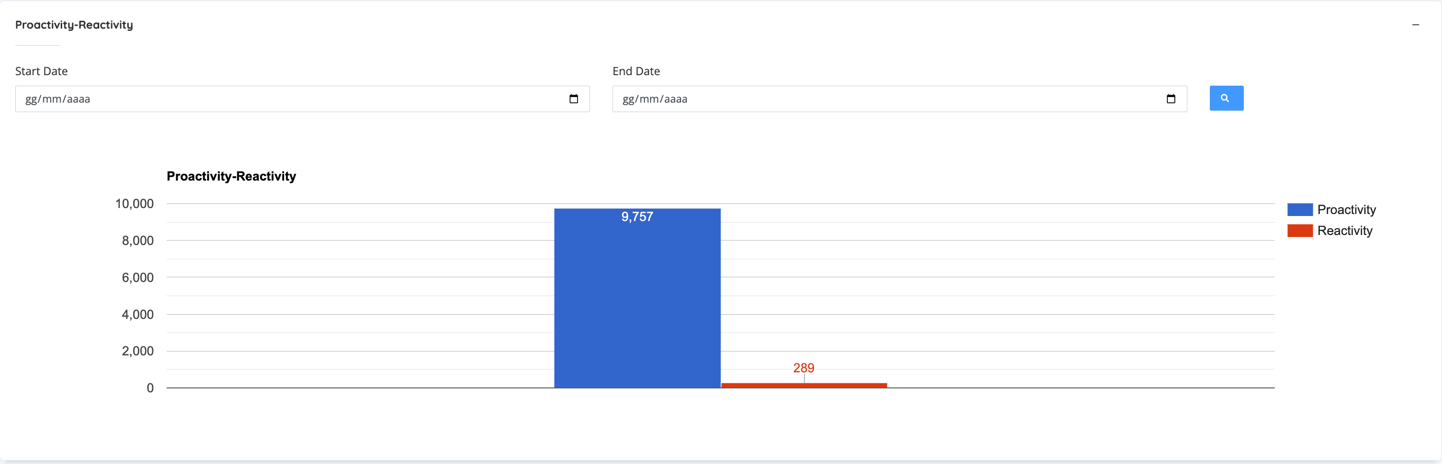
In addition, a proactivity vs reactivity KPI highlights whether the system is preventing hazards or reacting after events.

Consequently, tracking corrective actions as a KPI supports closure discipline and reduces repeat near misses.

Finally, a risk matrix view helps demonstrate control effectiveness after actions are completed.
For a full workflow overview, visit: Near Miss & Incident Reporting Software (Pillar Page) . Additionally, for KPI formulas and reporting structure, see: Safety KPIs: Examples + Formulas + Dashboard Template .
Compliance & Data Privacy in Near Miss Investigations
OSHA, ISO 45001 and GDPR principles
- OSHA guidance: OSHA Incident Investigation Overview .
- ISO 45001: expects investigation of incidents and near misses to strengthen the safety management system.
- GDPR: protect identities, support anonymous reporting where needed, and secure storage/access control.
Therefore, digital systems help compliance by timestamping, securing, and archiving reports. In addition, access permissions reduce exposure of sensitive information during a near miss investigation.
Technology Integration & the Future of Near Miss Investigation
What “good” looks like in modern systems
- Today, mobile apps enable fast reporting, even offline.
- Meanwhile, dashboards connect near miss data with injury KPIs for leadership visibility.
- Furthermore, analytics and AI support pattern detection across sites.
- Finally, risk matrices visualize improvement from initial to mitigated risk.
Conclusion
Every near miss is an opportunity to prevent real accidents. Therefore, a consistent near miss investigation, combined with KPIs and dashboards, helps organizations move from reaction to prevention.
With SpeakUp4Safety , near miss management becomes measurable, auditable, and faster to close. Ultimately, this approach strengthens safety culture, reduces injuries, and supports compliance.
FAQ: Near Miss Investigation
What is a near miss in safety?
A near miss is an unplanned event that could have caused injury, damage, or environmental impact, but did not. However, it still signals a real hazard that must be corrected.
Why investigate near misses if nobody got hurt?
Near misses are early warnings of system weaknesses. As a result, investigating them prevents future injuries and improves safety performance over time.
Are near misses leading or lagging indicators?
Near misses are often used as leading indicators when they drive prevention actions (RCA, CAPA, verification). Meanwhile, injury rates are lagging indicators because they measure harm after it happens.
Which KPIs should be tracked for near miss investigation?
Track reporting rate, investigation on-time rate, closure time, repeat event trends, and corrective action completion. Moreover, dashboards help make these KPIs visible across sites.
How can SpeakUp4Safety support near miss investigation?
SpeakUp4Safety supports mobile reporting, structured investigation workflows, KPI dashboards, and secure audit-ready records. In addition, it supports trend analysis to prevent repeat incidents.