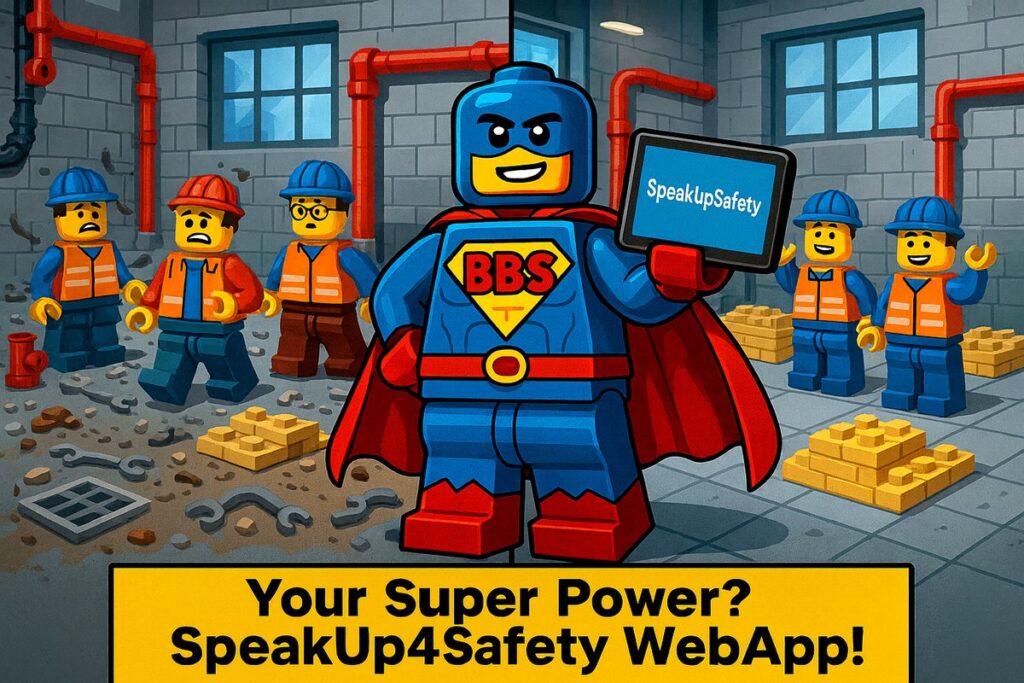
How SpeakUp4Safety makes workplace safety truly operational
Introduction
Behaviour Based Safety SpeakUp4Safety helps organisations move beyond rules and PPE by improving how people work every day.
Instead of collecting observations and stopping there, teams use a digital workflow to turn behaviours into decisions, actions and verified results.
As a result, safety becomes measurable, repeatable and easier to sustain.
Moreover, when you combine Behaviour Based Safety (BBS) with a structured EHS workflow, you strengthen worker participation, improve reporting quality and build a stronger safety culture.
The core principles of Behaviour Based Safety
- Behaviour drives outcomes: unsafe choices often precede incidents, so teams must observe what happens in real work.
- Observation creates clarity: structured checklists help you spot patterns and prioritise improvements.
- Reinforcement works: recognise safe behaviours to encourage repetition and shared ownership.
- Participation matters: workers, supervisors and management build safety together, not top-down.
- Continuous improvement wins: every observation becomes input for learning and risk reduction.
Turning BBS into execution with SpeakUp4Safety
However, many BBS programs slow down when teams rely on paper, email or disconnected spreadsheets.
Therefore, SpeakUp4Safety focuses on speed and follow-through: workers record behaviours in seconds, while leaders manage the workflow and close actions with evidence.
- Digital: workers record safe/unsafe behaviours from the app in seconds.
- Instant: the platform sends observations in real time, so teams avoid delays and data loss.
- Inclusive: everyone contributes at any time, which increases participation and data quality.
Roadmap for implementing BBS with SpeakUp4Safety
1) Initial analysis
- First, identify critical behaviours for your processes and tasks.
- Next, establish a baseline of the current safety culture and reporting habits.
2) Training & awareness
- Then, run BBS workshops for workers and leaders.
- At the same time, introduce SpeakUp4Safety as the operational tool that supports the workflow.
3) Start digital observations
- After that, collect observations directly in the app (safe and unsafe behaviours).
- In addition, encourage participation across all organisational levels.
4) Corrective actions (CAPA)
- Now, create, assign and track corrective actions in the software with clear owners and due dates.
- Finally, prioritise actions using the hierarchy of controls to drive the most effective interventions.
5) Monitoring & feedback
- Review weekly or monthly reports on behaviours, actions and overdue items.
- Consequently, teams learn faster and leadership can remove barriers to execution.
6) Continuous improvement
- Periodically refine the observation list and categories.
- Likewise, update checklists and actions based on lessons learned and new risks.
In practice, SpeakUp4Safety scales from complex plants to medium-sized sites because it standardises the workflow and keeps evidence in one place.
KPIs to measure change and workplace climate
- % of safe behaviours observed
- Number of observations collected
- Average time to close corrective actions
- Distribution of actions by hierarchy of controls
- Reduction in incidents and near misses over time
- Employee engagement and perception of safety
Therefore, when you track these KPIs inside SpeakUp4Safety, you clarify priorities and you can prove improvements with consistent data.
From data to action: the Hierarchy of Controls Pyramid
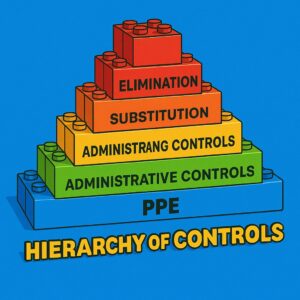
For example, with its integrated workflow,
SpeakUp4Safety turns observations
into assigned and tracked actions, so teams prioritise high-impact controls and verify completion with evidence.
FAQ
What is Behaviour Based Safety (BBS)?
BBS helps teams prevent incidents by observing behaviours, reinforcing safe choices and improving work practices through structured feedback.
Why should my company adopt BBS?
Because BBS targets what people do during real work. As a result, teams reduce risky behaviours and strengthen worker participation.
How does SpeakUp4Safety support BBS?
The app captures observations quickly. Then the software manages workflow, ownership and CAPA follow-through using the hierarchy of controls.
How long does it take to implement BBS with SpeakUp4Safety?
Most organisations see early results within the first months. Typically, a 2–4 week pilot creates the baseline, workflow and adoption plan.
What additional benefits does SpeakUp4Safety provide?
Beyond safety performance, it improves communication, builds trust and supports an audit-ready culture through consistent evidence and closure.
Conclusion
Behaviour Based Safety works best when teams connect observations to action.
Consequently, SpeakUp4Safety helps you capture behaviours, manage CAPA and verify results—so BBS becomes operational, not theoretical.
Questions and answers on this topic
Do you have practical questions or want to go deeper into the topic?
Here we collect the most relevant questions asked by EHS professionals
together with answers from the SpeakUp4Safety Team to help you turn concepts into action.
Do you have a question about this topic?
Submit your question by email. We review every request and publish only the questions that help the community.
Privacy note: we use your information only to respond to your request.