From detection to prevention
Many safety systems are designed to detect a hazard and warn the operator. But what happens when the available reaction time is too short, or when the operator does not respond?
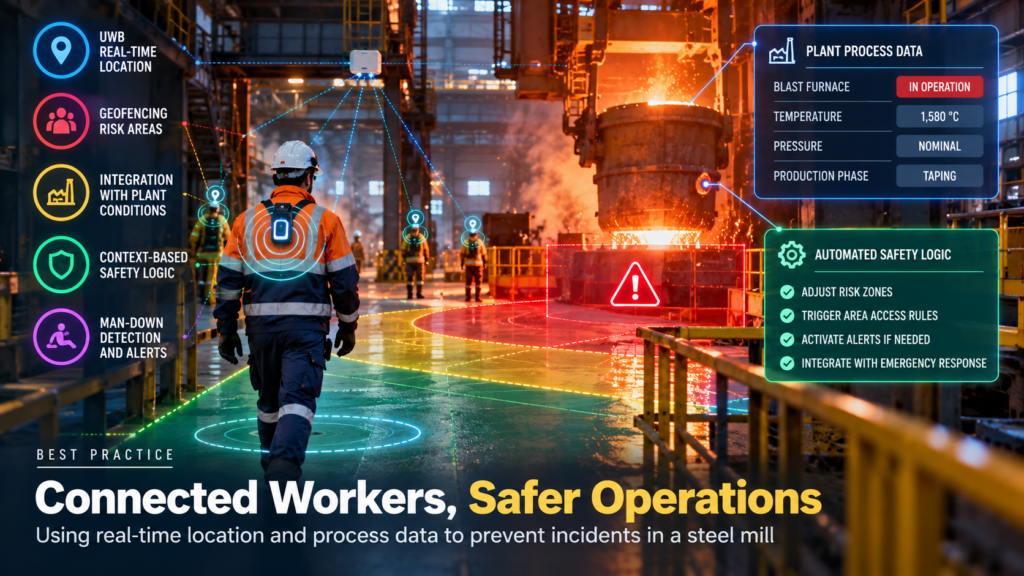
This is where Direct Control changes the safety model: technology does not only provide information. Under defined conditions, it can intervene directly to prevent or mitigate an unwanted event.
Detect → Decide → Direct Control → Prevent
A useful way to describe the concept is through four steps:
- Detect — identify the hazard or potentially dangerous interaction.
- Decide — evaluate whether the situation has reached a predefined intervention threshold.
- Direct Control — automatically influence or restrict the machine response.
- Prevent — reduce the likelihood or severity of the event.
A practical example
Collision-mitigation technologies used on mobile equipment illustrate the principle well. Depending on the system and configuration, safety technology can combine object or personnel detection with warnings and automatic machine intervention when defined risk conditions are reached.
The important point for QHSE professionals is not the individual technology itself. It is the shift in the control philosophy: from informing a person about risk to designing the system so that it can act when critical conditions occur.
Why this matters for the hierarchy of controls
Direct Control invites us to look beyond training, procedures and warnings. Where technically feasible, engineered safeguards can reduce dependence on perfect human reaction at the exact moment a hazard develops.
This does not remove the operator from the safety system. It changes the allocation of responsibility between people, equipment and organizational controls — and makes the design of thresholds, overrides, failure modes and human-machine interaction especially important.
Community question
Where should we draw the line between warning the operator and allowing technology to take direct control?
Share examples, concerns and lessons learned from your industry with the SpeakUp4Safety QHSE Community.