
Near miss & incident reporting EHS software
Near miss incident reporting EHS software for ISO 45001 teams
SpeakUp4Safety is near miss reporting software designed to convert frontline reporting into auditable prevention—with ownership, deadlines, and evidence-based closure. Moreover, it supports incident reporting in the same workflow, so your data stays consistent across sites.
First, capture near misses, hazards and incidents in minutes. Then, route each report to the right owner. Finally, assign corrective actions (CAPA) with due dates and closure evidence. As a result, your incident reporting process becomes consistent, measurable, and easier to audit.
Near miss reporting software: see it in action
A compact reporting experience that supports a consistent near miss incident reporting process, creates CAPA-ready records, and strengthens ISO 45001 documented information. Therefore, the same workflow can scale from one site to multiple locations.
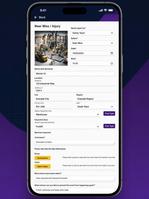
Importantly, the form does more than collect information. Instead, it standardizes the workflow: capture, route, investigate, act and verify. As a result, EHS teams get comparable data across departments and sites.
What’s included in the near miss incident reporting EHS software
To reduce repeat events, a near miss reporting system must connect reporting to action. Therefore, the core modules below are built to support the full life cycle: report → investigation → CAPA → verification → dashboards.
Structured reporting
- Consistent event classification across sites.
- Context fields (area, machine, task, shift) for better investigations.
- Photo/video evidence to reduce ambiguity.
Investigation-ready records
- Preserve “as-found” conditions with timestamped evidence.
- Link reports to RCA notes and contributing factors.
- Track investigation progress to completion.
CAPA and effectiveness
- Owners, due dates, reminders, and overdue visibility.
- Hierarchy of controls support (engineering, admin, PPE, etc.).
- Effectiveness verification before closure.
Dashboards & KPIs
- Leading and process KPIs (reporting rate, on-time investigations, closure).
- Trends, hotspots, repeat causes, and action performance.
- Leadership visibility with audit-ready traceability.
1 What this near miss reporting software delivers
A consistent reporting and action workflow: events are captured the same way, routed to the right roles, documented with evidence, and prepared for CAPA and effectiveness review. Consequently, prevention becomes measurable—not assumed.
2 Structured reporting & accountability
- Send report to: assign triage to Supervisor/EHS/Site Admin.
- Event classification: consistent categorization across sites.
- Date & time: traceability for trends and response time.
3 Location traceability
- Address details: precise identification for multi-site operations.
- Geolocation-ready: map recurring exposure points and hotspots.
4 Work context & exposure identification
- Area & machine: link the report to the workplace scenario.
- Free Type option: no report blocked by missing master data.
- Comments: capture abnormal conditions and contributing factors.
5 Evidence collection
- Photo: document the condition “as found”.
- Video: capture dynamic factors (traffic, access, layout).
6 Immediate correction & prevention planning
- Actions taken: containment measures (stop work, isolate area, barriers).
- Prevent recurrence: measures aligned with the hierarchy of controls.
- Assign corrective actions (CAPA) directly from each report.
7 CAPA readiness & effectiveness review
- Enable risk prioritization.
- Open and assign corrective actions.
- Verify effectiveness before closure.
Who it’s for
If you need consistent near miss and incident reporting across sites—and a clear path from report to CAPA—this workflow is built for you. Moreover, it supports teams that must prove closure effectiveness during audits.
- Manufacturing, Logistics, Construction, Oil & Gas
- Multi-site teams needing consistent classification and accountability
- EHS teams requiring evidence-based closure and effectiveness verification
Benefits of near miss incident reporting software
When reporting is complicated, people stop reporting. Consequently, risks stay hidden until an incident happens. SpeakUp4Safety keeps the experience simple for the field, while preserving depth for investigations, CAPA, and audit readiness.
Increase reporting rate
- Mobile-first experience to reduce friction for frontline teams.
- Fast submit, guided fields and clean classification.
Improve investigation quality
- Context fields support better root cause analysis.
- Photo/video evidence improves triage speed and clarity.
Reduce overdue actions
- Owners, deadlines, reminders and status visibility.
- Evidence-based closure improves accountability.
Stronger ISO 45001 documentation
- Traceability from report → CAPA → effectiveness.
- Consistent documented information across sites.
From report to prevention: end-to-end workflow
Standardize how events are captured, investigated, and closed—then convert learnings into prevention. As a result, teams reduce repeat events and increase trust in reporting.
- Capture a near miss/hazard/incident in seconds (web + mobile).
- Triage and route to the right owner.
- Investigate with structured fields and evidence.
- Act with CAPA ownership and deadlines.
- Verify effectiveness and close with evidence.
- Learn through trends, hotspots and recurring causes.
Recommended guides (cluster content)
Near miss KPIs you can track in dashboards
Reliable KPIs start with consistent reporting data. In other words, better inputs produce clearer trends and stronger prioritization. Therefore, this KPI set focuses on leading indicators and execution discipline.
Leading indicators
- Near miss reporting rate (by site/area)
- High-risk events reported vs. closed
- Repeat near miss rate (recurring causes)
Process & effectiveness
- Investigation on-time rate (SLA)
- CAPA closure time + overdue actions
- Effectiveness verification rate
CAPA management linked to each report
With SpeakUp4Safety, a near miss report is not the end of the story. Instead, it becomes a tracked action plan with owners, due dates, and verification—so prevention is measurable.
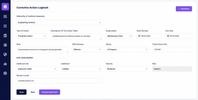
Key fields captured for each CAPA
- Hierarchy of controls: elimination, substitution, engineering, administrative, PPE.
- Owner + due date: accountability and execution speed.
- Status + notes: transparency across stakeholders.
- Effectiveness: verify results before closure.
Operational discipline
- Keep traceability from report → action → verification
- Notify owners and escalate overdue actions
- Reduce repeat events by tracking recurring causes
Dashboards for near miss reporting and incident reporting
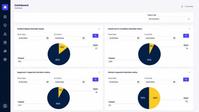
Dashboards translate daily work (reports, CAPA, investigations) into trends and closure performance. Consequently, leadership can prioritize controls and verify outcomes over time.
Compliance & data privacy (audit-ready records)
Documented information and access control are critical for audits and privacy. Therefore, secure storage, timestamps, and role-based permissions support consistent governance during investigations and CAPA closure.
ISO 45001 reference
Official ISO page for ISO 45001: ISO 45001.
FAQs
Is this an incident reporting software or a near miss reporting software?
Both. SpeakUp4Safety supports proactive reporting (near misses and hazards) and incident reporting in the same ISO 45001-aligned workflow: routing, CAPA assignment, reminders, and evidence-based closure.
Can we customize forms and categories across multiple sites?
Yes. You can standardize core fields for comparability, while keeping local flexibility when needed. Consequently, KPI trends remain reliable across sites.
Does it support corrective actions (CAPA) and overdue tracking?
Yes. You can assign owners and deadlines, monitor overdue actions, and close actions with evidence and effectiveness verification.
Can the workflow support investigations and root cause analysis?
Yes. Reports are investigation-ready with context and evidence. Moreover, you can connect investigations to RCA practices and CAPA closure discipline.
Is SpeakUp4Safety available on mobile?
Yes. Mobile reporting reduces friction for frontline teams, which improves participation and speeds up triage.
How do we start without scheduling a demo?
Start by exploring the free demo forms, then implement one workflow (Near Miss Reporting). After that, expand to CAPA tracking and KPI dashboards.
Next steps
If your goal is to improve reporting, reduce overdue CAPA, and strengthen ISO 45001 traceability, the fastest way to start is to review the demo forms and align the workflow to your site structure. Moreover, you can use the near miss investigation guide to standardize how teams close actions.