Workplace safety has shifted from ticking compliance boxes to actively preventing harm. In 2025, a modern Safety Management System (SMS) is a digital approach that connects people, equipment, and processes in near real time.
Traditionally, many programs waited for accidents and then reacted. However, today’s fast-moving workplaces need a smarter approach. Therefore, an effective SMS uses live data and automated workflows to help teams plan better, act faster, and improve continuously. As a result, organizations can reduce incidents, cut downtime, and protect the workforce.
In this blog, you will see how safety has evolved from reactive programs to proactive, data-driven systems powered by AI, automation, and real-time reporting.
Moreover, you will learn how a modern digital safety system works end-to-end—framework, technologies, culture, and key features—and how SpeakUp4Safety brings it all together.
Safety Management System Framework (Plan–Do–Check–Act)
A modern Safety Management System builds on four core pillars: Plan, Do, Check, Act (PDCA). However, in 2025 each pillar becomes stronger through data, automation, and fast feedback loops. Consequently, teams can move from documentation to measurable prevention.
Plan: set goals and define risk priorities
First, set clear and measurable goals. For example, reduce recordable incidents by X% or increase near-miss reporting. Then, link targets to business priorities so the program remains visible and supported.
Do: execute with digital workflows
Next, turn plans into daily practice. In particular, use digital workflows, mobile inspections, automated permits, and task assignments that everyone can follow. As a result, execution becomes more consistent across shifts and sites.
Check: monitor performance continuously
Meanwhile, replace manual tallying with continuous monitoring. Sensors, mobile reports, and dashboards provide real-time visibility into performance. Additionally, for a deeper method to track results, explore: Health and Safety KPIs .
Act: close the loop and prove effectiveness
Finally, use analytics to deploy corrective actions, adjust procedures, and verify whether fixes actually reduce risk. Therefore, improvement becomes continuous rather than reactive.
In short, a digital SMS connects PDCA into a continuous improvement loop. So, safety performance evolves with operational needs.
What Makes a Safety System Future-Ready in 2025
Three capabilities separate modern systems from older programs. As a result, organizations move from record-keeping to prevention.
Integration: one platform, full risk context
First, integrate training, incidents, audits, maintenance, and ESG data. Therefore, teams can see the full context of risk instead of working in silos.
Automation: less admin, faster execution
Next, automate repetitive work: schedule inspections, escalate overdue actions, generate reports, and maintain audit trails. Consequently, teams spend more time preventing risk and less time chasing paperwork.
Prediction: detect risk before incidents happen
Finally, use patterns from incident history, sensors, and behavior reports to identify rising risk early. As a result, organizations can intervene before minor signals become major events.
Now, let’s look at the technologies that enable predictive safety.
Key Technologies That Power Predictive Safety
A predictive safety program uses modern tools to turn raw signals into early warnings. In particular, these technologies help teams act sooner and more consistently.
AI and predictive analytics
To begin with, AI models detect patterns in incident history, sensor streams, and field reports. Then, they suggest where to focus inspections, training, or maintenance. As a result, risk is addressed earlier.
IoT sensors and wearables
In addition, sensors monitor conditions (temperature, vibration, gas levels) while wearables can support exposure and fatigue monitoring. Therefore, hazards can be detected before they escalate.
For a technology-focused guide on using KRIs for early risk detection, read: this KRI guide .
Cloud platforms
Moreover, cloud platforms centralize data and keep procedures aligned across locations. As a result, everyone works from the same updated information.
Mobile and voice reporting
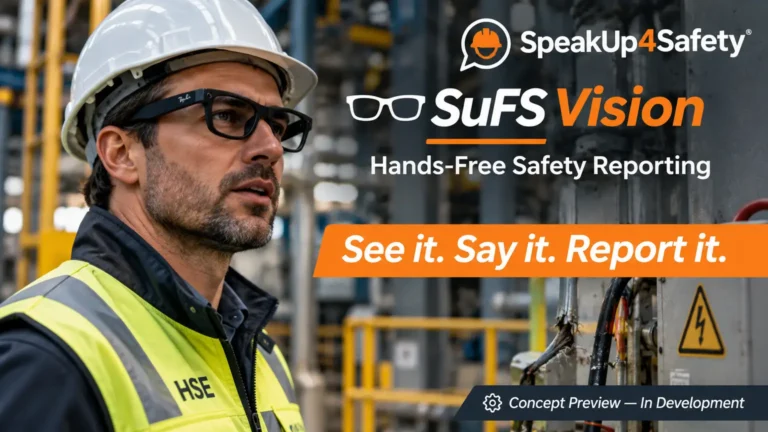
Finally, mobile reporting allows teams to capture hazards instantly with photos and locations. Where appropriate, voice inputs reduce friction for frontline teams. Consequently, reporting improves.
Overall, these tools support the next transformation: building a predictive, people-first safety culture.
How to Build a Predictive and People-First Safety Culture
Technology helps, but culture makes it stick. Therefore, a predictive culture grows when everyone—from frontline teams to leadership—commits to learning and acting early.
- For example, treat near-misses and observations as valuable leading indicators, not nuisances.
- In addition, include wellbeing factors (fatigue, stress, workload) in safety discussions and metrics.
- Moreover, reward proactive reporting and quick corrective action.
- Finally, share lessons learned from near-misses and close calls so teams can improve together.
When people trust the process and see that reports lead to real change, participation rises. As a result, safety performance improves.
Compliance and Sustainability: One Unified Approach
Modern EHS platforms increasingly integrate safety with sustainability and governance (ESG). Consequently, organizations can track compliance requirements, maintain audit trails, and connect sustainability metrics (like energy use or emissions) to risk outcomes.
Additionally, this connection builds transparency for regulators, investors, and employees. Then, once compliance is streamlined, teams can focus on improving performance with data-driven actions.
For authoritative references, you can review: ISO 45001 overview and OSHA Safety and Health Management guidance .
Essential Features of a 2025-Ready Safety Platform
A modern platform should go beyond basic reporting. Instead, it should predict risk, support better decisions, and simplify compliance. Therefore, it must combine advanced digital capabilities with practical modules used every day.
Digital capabilities that enable prevention
- Predictive safety alerts (AI + historical data)
The system should detect early warning signs based on patterns. As a result, teams can act before incidents occur. - Automated audits and compliance workflows
Workflows should schedule audits, collect evidence, and track corrective actions. Consequently, manual effort decreases and consistency improves. - Real-time dashboards and visual analytics
Dashboards should show trends, heatmaps, and role-based insights. Therefore, leaders can prioritize actions quickly. - Mobile reporting for frontline teams
Field employees should report hazards, near misses, and incidents with photos and checklists. In turn, data quality and speed improve. - Cloud architecture and integrations (APIs)
The platform should connect with HR, maintenance, ERP, and contractor systems. As a result, data stays linked to operations. - Incident management and corrective actions
The tool should support investigations, root causes, and escalations until closure. Finally, it should verify effectiveness. - Data governance and secure access controls
Strong permissions and secure data handling are essential. Therefore, sensitive information stays protected.
Core app modules that strengthen daily safety practices
Alongside advanced features, the platform should include practical modules for daily operations:
- Unsafe acts and unsafe conditions
Enable quick reporting of hazards and unsafe behavior. As a result, leading indicators improve. - Workplace equipment audits
Support inspections of forklifts, tools, and equipment with mobile forms. Therefore, checks become consistent and traceable. - Contractor and supplier qualification
Evaluate competency, documents, certifications, and compliance. Consequently, contractor risk is reduced. - Near-miss and incident investigation
Provide structured workflows to identify causes and assign actions. Then, track closure. - Operational risk assessment
Help teams evaluate exposure before work begins. In short, prevention starts earlier. - Fire equipment inspections
Keep extinguishers, alarms, and firefighting systems compliant using standard checks. As a result, readiness improves.
With these features combined, the platform becomes predictive, efficient, and future-ready. Now, let’s see how SpeakUp4Safety supports this journey.
How SpeakUp4Safety Helps You Move Forward
SpeakUp4Safety helps organizations modernize EHS and safety processes through digital workflows and data-driven insights. Moreover, it transforms manual activities into a connected approach that supports faster decisions and stronger prevention.
- First, structured reporting that creates analytics-ready data for early risk detection.
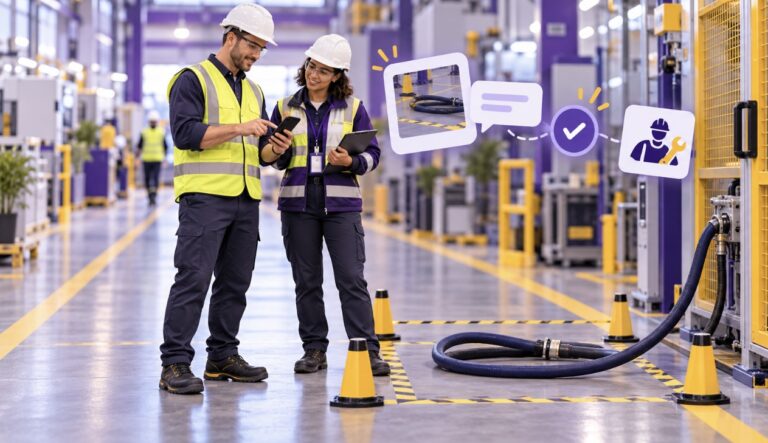
- Next, simple mobile reporting so frontline teams can log hazards quickly.
- Additionally, automated workflows to track investigations and corrective actions until closure.
- Then, clear dashboards for leaders and supervisors to prioritize actions.
- Finally, integrations that keep safety data connected with maintenance and HR processes.
As a result, teams can act on real data and keep improving every day.
Conclusion
In 2025, workplace safety relies on prediction, real-time visibility, and digital workflows. Therefore, modern programs use AI, automation, and frontline reporting to prevent incidents before they happen.
When organizations connect people, data, and processes in one platform, safety becomes smarter and faster. As a result, prevention improves and risk decreases.
With SpeakUp4Safety, teams can streamline reporting, automate audits, track corrective actions, and use data-driven insights to stay ahead of hazards—all within one unified solution.
Ready to modernize your Safety Management System? Get started with SpeakUp4Safety today .
Questions and answers on this topic
Do you have practical questions or want to go deeper into the topic? In this section we collect the most relevant questions asked by EHS professionals together with the official answers from the SpeakUp4Safety Team, to help you turn concepts into concrete actions.
Do you have a question about this topic?
Submit your question by email. It will be reviewed by our specialists and, if relevant for the community, published with an official response.
Privacy note: the information you provide will be used exclusively to respond to your request.